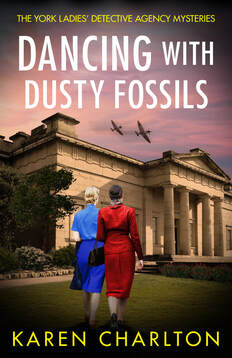
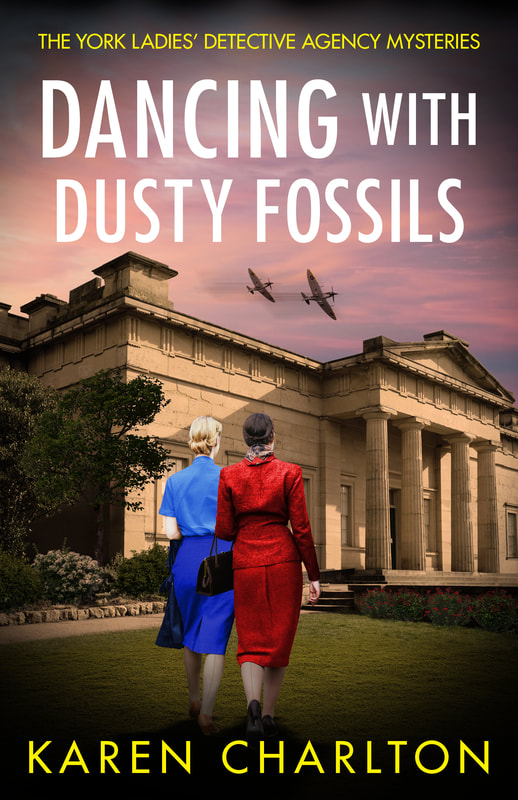
Both of York’s incredible museums feature in my novel, Dancing With Dusty Fossils. The older, more prestigious Yorkshire Museum features on the book cover, but the curators from both museums worked closely together during WW2. Many scenes in my book are set in at the Castle Museum and its female curator, Violet Rodgers, helps my two intrepid sleuths track down the killer of her colleague.
So, imagine my delight when I discovered that the Gala Dinner at this year’s Crime Writers Association (CWA) conference in York was to be held in the highly unusual venue of the cobbled Victorian Street in the Castle Museum. While we dined, we were surrounded by rows of recreated Victorian shops, including a chemist with a glistening array of poisons in jars behind the counter and a police station complete with a prison cell.
So, imagine my delight when I discovered that the Gala Dinner at this year’s Crime Writers Association (CWA) conference in York was to be held in the highly unusual venue of the cobbled Victorian Street in the Castle Museum. While we dined, we were surrounded by rows of recreated Victorian shops, including a chemist with a glistening array of poisons in jars behind the counter and a police station complete with a prison cell.
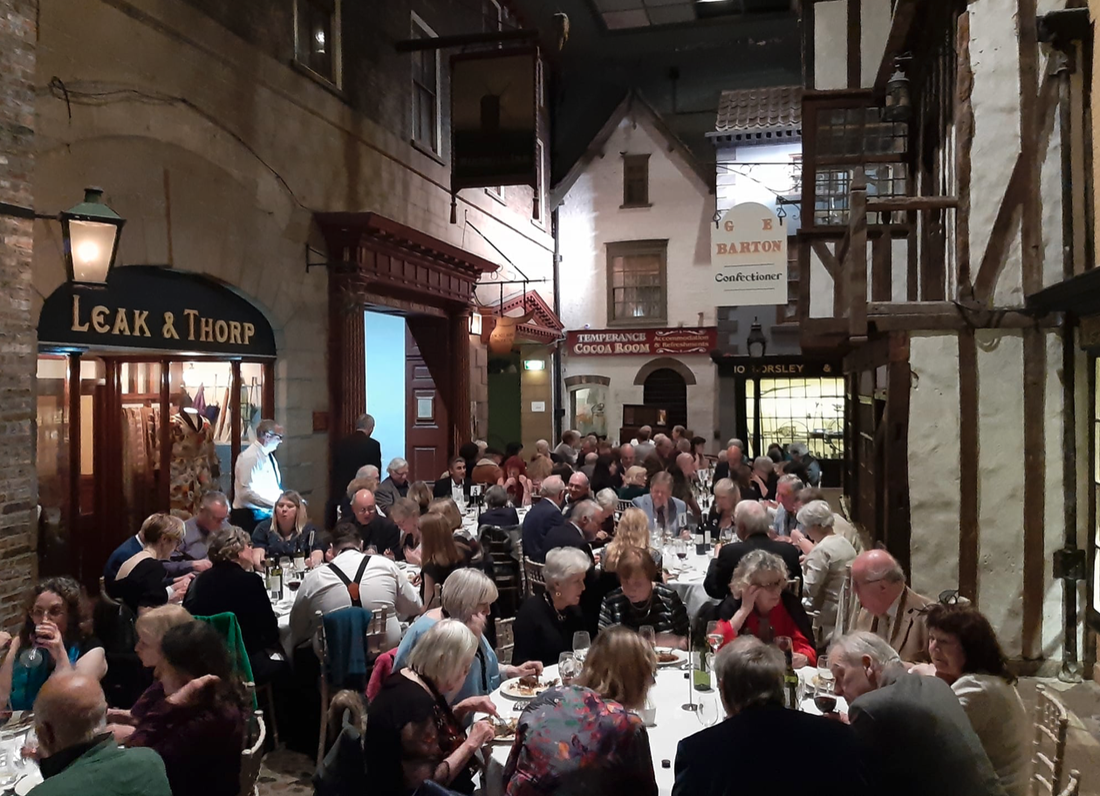
2023 CWA GALA DINNER IN YORK
Opened in 1938, York Castle Museum was the first of a new kind of museum in Britain which explored and commemorated our social history. It paved the way for bigger attractions, like Beamish, all of which show the life of our ancestors in context rather than in dusty glass cabinets.
Unbelievably, the bulk of the exhibits at the Castle Museum were collected by one man, Dr John Kirk.
Dr Kirk had a medical practise in Malton. He was fascinated by history, and by vanishing ways of life – especially rural life. He realised that many old traditions and ways of working were changing forever. Acutely conscious that some trade skills were becoming obsolete he started to collect archaic work tools and other rare survivals of these endangered ways of life. He filled his home with bygones, his collection growing year on year. Sometimes Kirk accepted objects in lieu of payment for his medical services.
By the 1930s, his vast collection had outgrown his home. It included everything from perambulators and children’s toys to antique weapons, potato dribblers to a Tudor barge and Victorian hypodermic needles to horse bridles. Larger items included whole Victorian shop fronts, a hansom cab and a stuffed horse.
Determined to find a permanent and publicly accessible home for his vast and rare collection, Dr Kirk approached York Corporation who gave him the disused female prison in the centre of the city for his museum and helped modify it, so it was fit for purpose.
Unbelievably, the bulk of the exhibits at the Castle Museum were collected by one man, Dr John Kirk.
Dr Kirk had a medical practise in Malton. He was fascinated by history, and by vanishing ways of life – especially rural life. He realised that many old traditions and ways of working were changing forever. Acutely conscious that some trade skills were becoming obsolete he started to collect archaic work tools and other rare survivals of these endangered ways of life. He filled his home with bygones, his collection growing year on year. Sometimes Kirk accepted objects in lieu of payment for his medical services.
By the 1930s, his vast collection had outgrown his home. It included everything from perambulators and children’s toys to antique weapons, potato dribblers to a Tudor barge and Victorian hypodermic needles to horse bridles. Larger items included whole Victorian shop fronts, a hansom cab and a stuffed horse.
Determined to find a permanent and publicly accessible home for his vast and rare collection, Dr Kirk approached York Corporation who gave him the disused female prison in the centre of the city for his museum and helped modify it, so it was fit for purpose.
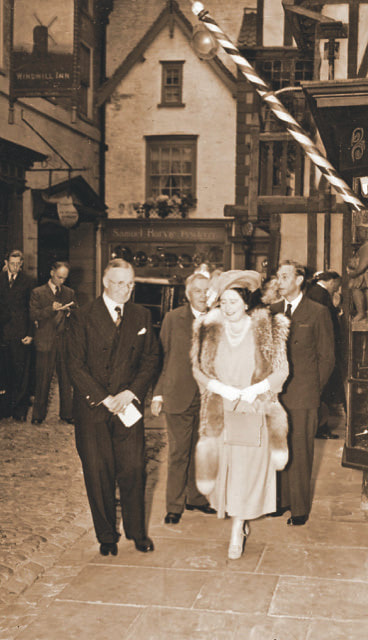
Dr Kirk with King George VI and Queen Elizabeth at the museum
The Castle Museum finally opened in 1938 and it caused much excitement in the city. Its biggest attraction was the recreation of a late Victorian street, named 'Kirkgate' in Dr Kirk’s honour and lined with all those shopfronts he’d collected and filled with his treasures. This street was the first of its kind in Britain and this was where we dined at the CWA conference.
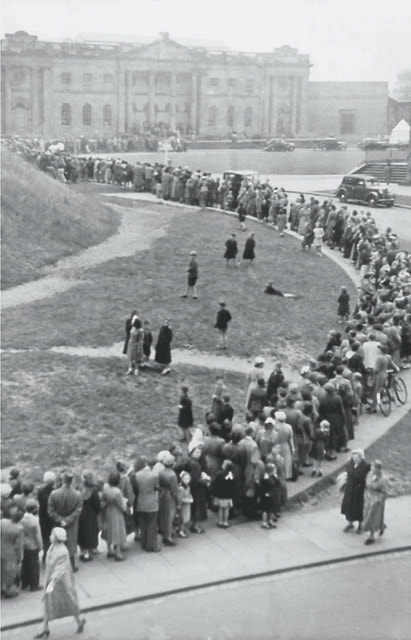
The queue for the opening of the Castle Museum
Sadly, by the time the museum opened in 1938, Dr Kirk was already a very sick man. He only just lived long enough to see his dream realised. He died in February 1940. Thankfully, he’d already appointed a successor, Violet Rodgers, one of the first female museum curators in Britain.
With the outbreak of war, most of the men in York were called up for military service and York Corporation asked Violet to run the museum (although they didn’t raise her salary).
With the outbreak of war, most of the men in York were called up for military service and York Corporation asked Violet to run the museum (although they didn’t raise her salary).
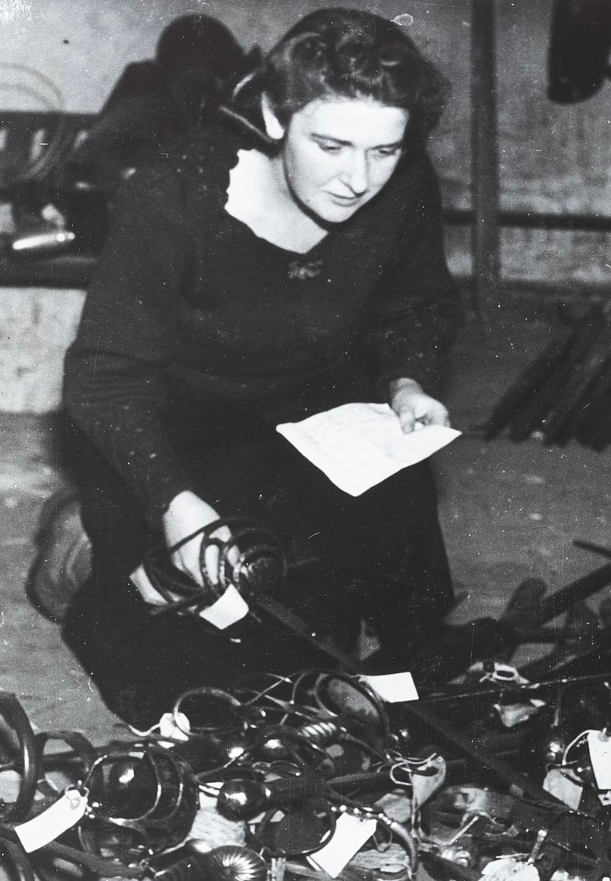
Violet Rodgers at work at the Castle Museum
WW2 was a difficult time for all British museums and art galleries. Once hostilities were declared, they scrambled to remove their most precious items to safety, away from the threat posed by the Luftwaffe. For example, most of the valuable antiquities from the British Museum in London were stored at Skipton Castle in West Yorkshire.
Although, the exhibits at the Castle Museum were unique, Violet recognised that in terms of historical value they didn’t compete with the incredible collection of Roman, Viking, Saxon and pre-historic artifacts at York’s older and more prestigious museum, the Yorkshire Museum. Violet gave up a lot of her free time during the war to help her colleagues at the Yorkshire Museum pack and dispatch their own items to safety.
Thankfully, when York was heavily bombed in 1942 the Castle Museum was spared – although the Yorkshire Museum was hit.
In 1945, when the men returned from war, the corporation appointed a male curator for the museum and gave him twice the money they’d paid Violet.
Naturally disgruntled, Violet married her fiancé, a Polish army lieutenant, Władysław Włoch, and in 1947 she moved with him to Warsaw to continue her career. She became a Curator at the Historical Museum of Krakow and was awarded the Polish Cross of Merit for her work.
Although, the exhibits at the Castle Museum were unique, Violet recognised that in terms of historical value they didn’t compete with the incredible collection of Roman, Viking, Saxon and pre-historic artifacts at York’s older and more prestigious museum, the Yorkshire Museum. Violet gave up a lot of her free time during the war to help her colleagues at the Yorkshire Museum pack and dispatch their own items to safety.
Thankfully, when York was heavily bombed in 1942 the Castle Museum was spared – although the Yorkshire Museum was hit.
In 1945, when the men returned from war, the corporation appointed a male curator for the museum and gave him twice the money they’d paid Violet.
Naturally disgruntled, Violet married her fiancé, a Polish army lieutenant, Władysław Włoch, and in 1947 she moved with him to Warsaw to continue her career. She became a Curator at the Historical Museum of Krakow and was awarded the Polish Cross of Merit for her work.
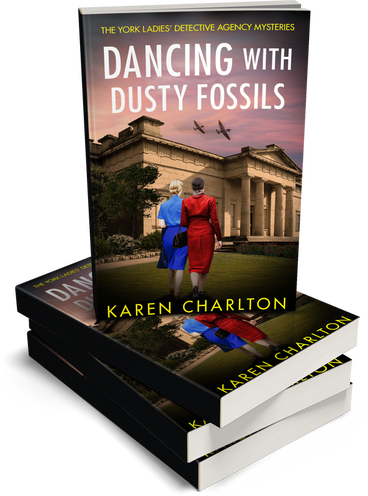
It was a pleasure and an honour to walk in the footsteps of Dr Kirk and Violet Rodgers during our Gala Dinner in April. And who knows? Maybe this fascinating and slightly spooky venue, which contains an interesting collection of potentially lethal curios, will spark my imagination and lead to a further outpouring of grisly and unusual crime fiction?
Here’s hoping.
Here’s hoping.


 RSS Feed