Bow Street Runners and Early British Detectives
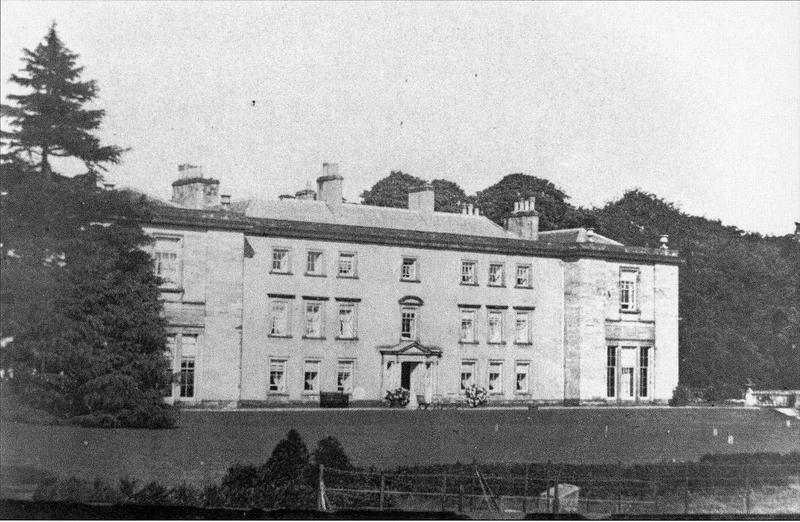
 Kirkley Hall, Ponteland In 2005, we made two surprising discoveries while researching my husband’s ancestors. We first learnt that he had a convicted felon, a Regency jail-bird, roosting in the branches of his family tree, called Jamie Charlton. Then we found out that a Bow Street detective, Stephen Lavender, had been involved in the investigation which sent our Jamie to trial.
Naturally, our first priority was to find out more about our skeleton in the closet but we were also intrigued by Detective Lavender. He was referred to as ‘a principal officer’ with the Bow Street magistrates’ court in London. I had heard the phrase ‘Bow Street runner’ many times before but I had no idea that there were British detectives as early as 1809. I had always assumed that detectives were created along with the rest of the police force by Sir Robert Peel in 1829.
Years of research at The National Archives in London and the Northumberland Records Office gradually disclosed that our Jamie had been convicted of stealing the rent money from the Northumbrian manor house, Kirkley Hall. It was an audacious crime; over £1,157 had been taken from the estate office at the hall. Our research also revealed that Nathanial Ogle, the wealthy owner of Kirkley Hall, had paid for Detective Lavender to come up from London to solve the case.
To Ogle’s delight, Lavender recovered the bulk of the missing money. It had been thrown back over the wall of the kitchen garden in a sack, and lay half-hidden by a currant bush for several days until the detective instigated a thorough search of the grounds. Only £162 of coins remained outstanding. This is not as surprising as it may seem. Most of the recovered money was paper banknotes which had only been in circulation for a few years; in 1809 most British commoners did not understand or trust paper money.
Lavender also discovered that Jamie Charlton, a disgruntled ex-employee of Kirkley Hall, had been on a generous spending spree in the weeks after the robbery and his investigation focussed on him. In May 1809, he had Jamie arrested and sent for trial at the August Assizes in Newcastle. However, they released him after an initial hearing because there was no evidence to actually connect him to the crime. At this point, Stephen Lavender went back to London, famous for retrieving most of the stolen rent money but unable to secure the conviction of his main suspect.
Jamie Charlton also went home but he was rearrested a year later. This time the evidence came from Jamie’s former cell mate, William Taylerson, and the local magistrate instigated the arrest. Taylerson claimed that when they shared a cell together in prison, Jamie Charlton had confessed to him that he had, indeed, committed the crime. Taylerson was a horse thief, already sentenced to death. After a trial which lasted fourteen hours, a jury of local landowners and nobility found Jamie guilty in just five minutes. They sentenced him to transportation, and granted Taylerson a full pardon. The whole thing smacked of a miscarriage of justice - even by the dodgy legal standards of the Regency.
The ideal plot for a historical novel had just landed in my lap and Catching the Eagle was born. It took two years to write this book, which was eventually published by Knox Robinson Publishers of Historical Fiction in December 2011.
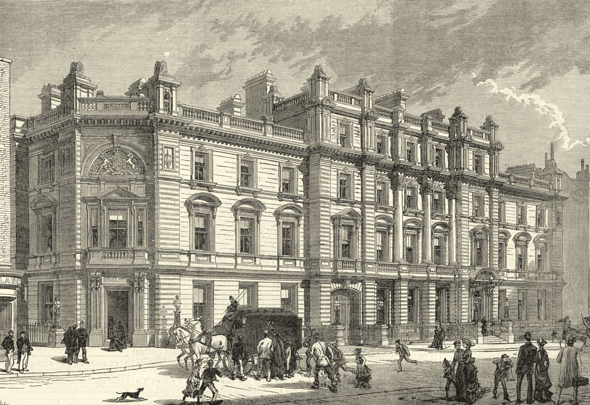
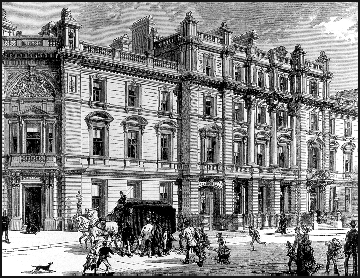
 Bow Street Magistrate's Court, London According to my research, when the principal officers like Lavender went out to work on cases in other counties of Britain, they usually worked alone. As a novelist, this presented me with an interesting dilemma. Literary convention in any crime fiction usually requires that the detective has an assistant. In the end, I decided to veer away from historical fact with Catching the Eagle and bow down to the literary convention; I gave Lavender an assistant, Constable Edward Woods. Although they were only minor characters in this first novel, I thoroughly enjoyed creating Woods and Lavender and developing the rapport and humorous dialogue which erupted spontaneously between them. I felt that I had created a winning duo of crime fighters and I didn’t want to let them go.
Natural curiosity drew me towards their world. I began to invest time, money and effort on investigating those early British detectives. ‘A Certain Share of Low Cunning: A history of the Bow Street Runners 1792 – 1839’ written by David J. Cox became the main source of my research. I discovered that back in 1809, Bow Street Magistrates’ court, was the thriving centre of policing in the crime-ridden capital of England. Bow Street and the Old Bailey Criminal Court were the vibrant partners in London’s justice system.
http://www. oldbaileyonline.org/ is ripe source of information and inspiration for any author interested in crime, criminals and early British detectives. This website documents the proceedings of the Old Bailey, between the years of 1674-1913 and contains details of 197,745 criminal trials held at London's central criminal court. Stephen Lavender frequently appears on the stand as a police witness in these documents.
Number 4 Bow Street was where Sir Henry Fielding, novelist and magistrate, first persuaded the British government to establish a police force in 1747. This was in response to the growing call to find an effective means to tackle the increasing crime and disorder in the capital, where every fourth shop was a ‘gin house,’ a vast sex trade sprawled across hundreds of brothels and gangs of highwaymen and cut-throats terrorized the roads on the outskirts of London. Fielding brought together eight reliable constables, who soon gained a reputation for honesty and efficiency in their pursuit of criminals and later came to be known as ‘the Bow Street Runners.’ But Fielding faced an uphill struggle against both organised crime in the capital, and the mistrust of the politicians who paid for his policemen.  George IV, The Prince Regent In the late eighteenth century, the wealthy elite of Britain preferred to spend their money on personal security, rather than funding a communal police force. If you needed to track down a criminal there were plenty of ‘thief takers’ – an early form of bounty hunter – whom the rich could employ to drag a suspect into the dock. There was huge resistance to the notion of a centralised police force because of the brutal excesses of the French police system across the Channel, under the revolutionary fanatic, Joseph Fouché. Nevertheless, the crime fighting force started by Sir Henry Fielding expanded and gained national recognition.
By 1809, the year of my novels, the number of police personnel had dramatically increased and a horse patrol had been established to bring some law and order to the crime-infested outlying areas. Principal officers were restyled ‘detectives’ and had various roles. Apart from supporting their colleagues in the capital, they were often sent out to help magistrates in the provinces with difficult cases. They took part in undercover work in periods of insurrection, for example, during the Luddite riots in the Midlands.
The principal officers were a policing elite, famous throughout London, and the aristocracy loved them. They did security work for the Bank of England and acted as bodyguards for Royalty, especially the Prince Regent. They were the only policemen allowed into Buckingham House, the forerunner of the palace. On occasions they were even sent abroad to help with crimes and criminals who had spilled out over our borders onto the continent.
According to the records I have unearthed, Stephen Lavender spent a lot of his time working on difficult cases out in the provinces. Wealthy landowning citizens, like Nathanial Ogle of Kirkley Hall, could request the help of a principal officer. Bow Street would charge them a hefty fee and the detectives could claim lucrative expenses on top of their salary. Many principal officers became very rich.
 The arrest of Emmeline Pankhurst However, the Bow Street officers were still regarded with mistrust by the general population and there were many allegations of police corruption – some of them genuine. In 1829, the government charged Sir Robert Peel with the task of creating a new national police force; a force which was properly funded and more accountable. Following this transition, Stephen Lavender became the highly-respected Deputy Chief Constable of Manchester.
Bow Street itself remained a magistrates’ court until 2004. During its two hundred and fifty year reign as Britain’s most famous police station, it has had both the famous, and the infamous, pass across its threshold. From the legendary lover, Giacomo Casanova, to the murderer, Dr. Crippen, and the notorious East End gangsters, the Kray twins; from the famous mother and daughter suffragettes, Emmeline and Christabel Pankhurst to the brilliant, homosexual playwright, Oscar Wilde and more recently, the Chilean dictator , General Pinochet.
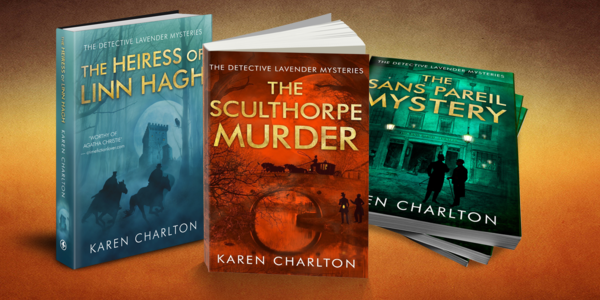
In that tense and frustrating period between the completion of my debut novel, Catching the Eagle, and securing a publisher for the book, the first seeds of a Regency whodunit began to germinate in my head. As far as I was concerned, there were only two policemen in England who could crack this mysterious case. I sat down at the computer and The Missing Heiress was born, with Detective Stephen Lavender and Constable Woods as the main characters. Ultimately, Stephen Lavender was the man who charged our ancestor with stealing the Kirkley Hall rent money and placed him in the dock but I’ve never held that against him. He was the natural choice for the detective in my new novel. In my mind, he had grown from an interesting minor character to a fully-fledged and fascinating protagonist. The Missing Heiress flew off my keyboard like silk and I completed it in ten months.
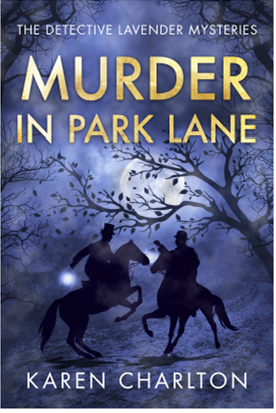
In this first novel in a new series, the two policemen are called back to Northumberland, to investigate the mysterious disappearance of a beautiful young heiress from a locked bedchamber. Convinced that this is a simple case of a young woman who has eloped with her lover, Lavender and Woods are later alarmed to discover a sinister world of madness, violence and secrets lurking behind the heavy oak door of the ancient pele tower at Linn Hagh.
The Missing Heiress was published by Knox Robinson Publishing on 6th December 2012.
(Article first published on Shots: Crime and Thriller eZine, December 2012)
Who were the 'Border Reivers?' Since choosing the title 'The Regency Reivers' for my first series of historical novels, I have frequently been asked: 'Who were the Reivers?'
‘Reive’ is an early English word meaning "to rob",
Border Reivers were raiders along the Anglo–Scottish border from the late 13th century to the beginning of the 17th century. During this time, England and Scotland were frequently at war and the area was lawless, godless and often decimated by opposing armies.
A tough area breeds tough people. The families who lived there – on both sides of the border – grouped together in clans for protection and survival. Loyalty to a feeble or distant monarch or reliance on the effectiveness of the law, were not good survival strategies for the people of the borders. Instead, they sought security through their own strength and cunning and set out in large mobs to raid other families. ‘Reiving’ - raiding for cattle and sheep (and whatever else which could be transported) was the only way to survive and it became an established way of life, a profession, which was regarded with no discredit amongst the Borderers. The Reivers moved only at night, taking advantage of their intimate knowledge of the remote and rugged terrain, to spirit away their ill-gotten plunder. Border Reivers As George MacDonald Fraser says in The Steel Bonnets, ‘they lived by despoiling each other’… ‘It was a time when the great border tribes, both English and Scottish, feuded continuously amongst themselves, when robbery and blackmail, were everyday professions, when raiding, arson, kidnapping, murder and extortion were an important part of the social system.’
Their heyday was perhaps in the last hundred years of their existence, during the time of the Stuart Kings in Scotland and the Tudor Dynasty in England.
The attitudes of the English and Scottish governments towards the border clans alternated between indulgence and encouragement. Secure in their rule in the majority of the two countries, the authorities in England and Scotland were happy to let the Reivers battle it out for supremacy in the narrow hill country between the two nations. These fierce families served as the first line of defence against invasion and it suited authorities to have gangs of outlaws harassing the enemy on the border. However, the royalty of both countries would only travel through the region with a large and heavily armed escort. Even they were afraid of the Reivers.
As soldiers, the Border Reivers were considered among the finest light cavalry in all of Europe; they were outstanding horsemen. Living on the frontier between two warring nations sharpened their soldiering skills. Many worked as mercenaries abroad.
Of course, the notion of Scottish Clans is now legendary around the world – mostly thanks to Sir Walter Scott and his ballads. What is not so well known, perhaps, is that on the English side of the border there were also large, unruly English clans like the Charltons, the Armstrongs, the Milburns, the Robsons, the Fenwicks and the Dodds.
A busy, busy summer...  The front and back of my new postcards I did not get much chance to notice the blistering heat and balmy evenings of summer 2011. During the six week school holiday, I was so busy with marketing, writing and researching book two in the Regency Reiver series, that I forgot to nip into the back garden and top up my tan. What's that? I would probably have caught pneumonia if I had tried to sunbathe this year? Oh well, maybe next year. ;)
Marketing Catching the Eagle This is going well. I have read the tomes which were recommended to me about how to market your book. Following this, I had some fantastic postcards printed with the book cover on the front and the blurb and other details on the back (see above.) Armed with these, I jumped into the car and set off for Northumberland. As you can see from the forthcoming events column, I managed to interest four Waterstones managers in book signings. The Northumberland Book Launch is organised at Kirkley Hall and the guest list seems to be getting larger all the time. I am also investigating the beautiful Middlesbrough Reference Library for my Teesside Book Launch. Thanks to help from my friend Jill Boulton, I have put a press pack together and we are about to start approaching the media. The Missing Heiress A Detective Lavender Mystery
I had hoped to have had this nearly finished by now but it is only half way through. However, the writing is going smoothly and I am thoroughly enjoying myself. I have decided that 30,000 words is not bad for four months work.
 Is this our James Charlton? Researching Book Two in the Regency Reivers Series
We have taken two trips to The National Archives in Kew this summer, and spent four very long and tiring days pouring over 200 year old, dusty manuscripts, searching for further details about Jamie Charlton's fascinating life. He has never been an easy character to pin down in the archives but we have now got some very tantalising leads. Of course, most of his escapades were because he was in the wrong place at the wrong time - he should have been awarded a medal for this skill - he definitely was a born survivor when it came to dealing with the curved balls which fate dealt him. Quite frankly, I think that people are going to be very surprised about what happened next. Book Two in the series is already an amazing journey for me - and hopefully it will for the readers, as well... :)
Beautiful, beautiful Bellingham...  The cricket pitch outside our hotel room We have just returned from a very pleasurable stay at the Riverdale Hotel, Bellingham, on the banks of the River Tyne. The food there is fantastic and it is one of our favourite places to just chill out. Bellingham is also the setting for the first novel in The Detective Lavender Series: The Missing Heiress.
Naturally, we were not going to miss out on the opportunity to combine a bit of research with some hedonistic pleasure. ;) http://www.riverdalehallhotel.co.uk/  Elsdon Pele Tower In my novel, a young woman, Helen Carnaby, disappears in mysterious circumstances from her family home in October 1809. She lives with her half-brothers and sister in an ancient Pele Tower which I have called Linn Hagh (from the old words for 'waterfall' and 'hall.') Pele Towers were family homes. They were built for protection during the dark days of the Border Reivers, when this area of Northumberland, was a lawless, no man's land between two warring nations. Linn Hagh Pele Tower is a figment of my imagination, but in the novel I have based it on the famous Pele Tower at Elsdon (still a private residence.)
The case of The Missing Heiress is investigated by Detective Stephen Lavender and his assistant, Constable Woods. Between my fictitious Linn Hagh and Bellingham, are the very real Hareshaw Woods. This steep-sided ravine is virtually inpenetrable, apart from the single path which meanders alongside the river. Above the path, the hillside rises steeply up to the rocky crags above. Many trees are contorted into grotesque shapes as they try to defy gravity, balance and reach the sunlight all at the same time. Some of the tree trunks are split like the sides of Chinese paper lanterns. Most of them are covered in moss, many sport a fabulous display of giant fungi. Fallen trees can look like huge serpents or prehistoric monsters. The path crosses the river at several points as it heads towards the waterfall - Hareshaw Linn. This was our favourite bridge. Here, Chris and I saw a dipper bobbing in an out of the water from the slimy, black rocks below. Earlier we had seen a small flock of goldfinches weaving around collecting seeds from a cloud of thistledown.  Hareshaw Linn Finally, we reached the magnificent Hareshaw Linn. At over 100ft high the waterfall is a spectacular sight and extremely noisy, as hundreds of gallons of water crash down onto the black, Jurassic rocks below. Combined with the overhanging sides of the gorge above, it is also quite unnerving. Huge boulders jut up from the black pool like tombstones. We made this journey on a brilliantly sunny day. Just imagine how forbidding it must be in in the depths of an icy winter - or in those dark, brooding days of late autumn, when The Missing Heiress is set.
Reluctantly we turned around, and headed back for the hotel. The entire walk was about seven miles from start to finish and I loved every step of it. Although, I have to confess that I had a good half an hour nap when we got back, while Chris watched the cricket match from the patio outside our room.  Hareshaw Linn
The first Catching the Eagle literary tour... ;)  The Charltons return to Kirkley Hall. A few weeks ago we had a very enjoyable day out in Ponteland with our good friends, Iain and Christine. They were curious to see the places mentioned in Catching the Eagle and Iain offered to take more photographs. Jokingly, we dubbed the trip 'the first Catching the Eagle literary tour.' Despite the horrendous rain we had a great day and a fabulous lunch at the Newhamm Edge Coaching Inn - now called The Highlander.  Looking out from the courtyard over the grounds Our first call of the day was at Kirkley Hall itself - the scene of the infamous burglary. The staff were wonderful and let us wander around freely taking photographs. They never batted an eyelid about the fact that my Chris was a descendant of the burglar mentioned on their website. However, when we were leaving the operations manager, Graeme Cook, did make a joke about searching Chris' haversack for any missing silverware (much to every one's amusement.)  Standing in front of the 'family pile' - Morpeth Gaol After Kirkley Hall we made brief visits to Milburn (where Jamie and Cilla lived) and Stamfordham church were they married, before finishing the day at Morpeth. By this time it was bucketing down and we were wearing rain coats over our jackets. Despite this, I think that this is my favourite photograph of the day. We were happy and relaxed - unlike poor Jamie Charlton who was dragged through that door 200 years ago, wearing leg irons. I bet he wasn't smiling. We really liked the shopping area in Morpeth and I became so distracted, that I quite forgot to keep my eyes open for all the public houses mentioned in the novel.
Never mind, we'll just have go back again another day. (All Photographs by Iain Wolstencroft.)
Photography and trespassing...  North Carter Moor Just returned from a fabulous afternoon with the camera up in Ponteland.
We resolved to try and photograph as many of the places as we could which had links to the family research and the places mentioned in Catching the Eagle.
As Robbie Burns would say: The best laid schemes o' Mice an' Men, Gang aft agley,...'
The first problem came at the beautiful North Carter Moor Farmhouse, the birthplace of Jamie Charlton and the home of three generations of his family (1720 - 1817.) North Carter Moor is not easy to find and it is guarded by a herd of extremely curious young cows, who clearly wanted to play with me as I scurried out of the car to open and close the gate. Chris, being the perfect gentleman, steadfastly remained in the driver's seat. Armed with a copy of the family tree as proof that we were not there to case the joint (well, you never can tell with us Charltons, can you?) I knocked on the farm door to ask if we could take a few pictures of our family's 18th century home. Sadly, no one was in.  Side view of North carter Moor We waited a while, and then decided to be cheeky and take a few photographs any way. Extremely conscious that somebody, somewhere, would have seen us and would report our curious behaviour back to the present owners, I scribbled an explanatory note and shoved it through the letter box. I'm guessing that this could now go one of two ways: the current owners of North Carter Moor may choose to log on here and and enjoy discovering some more about the history about their home; or, they may instruct their solicitor to sue us for trespass, breach of privacy and disturbing the peace of their cows. Watch this space...  Front view of North Carter Moor - once home to a Charlton generation with ten children.  St. Mary's church, Ponteland Next we went to St. Mary's church, Ponteland where the records tell us, many of Chris' ancestors are buried. Sadly, it would seem that if they are buried there, then the sexton just dug a hole and dropped them in - we couldn't find any of them. As the family's fortunes dwindled, it is possible that they just reused old family graves. No doubt they always intended to come back later, when they had more money and add a headstone...and then forgot (or got themselves transported.) Any gravestones which did once 'mark the spot' are now either absent or so badly eroded they are unreadable. I suspect that several have been removed on health and safety grounds - including that of James (1700-1770) and Isabel. The monumental inscription records for St. Mary's, tell us that it was 'on it's side by the wall' years ago. It has now either collapsed face down or been taken away. One gravestone of interest which we did find was that of Jane Nimmo (1799-1841.)
The full inscription reads: 'Sacred to the memory of Jane Nimmo who died April 22nd 1841 aged 42 years.'
This lady had to be related to Priscilla (Cilla) Charlton in some way. Nimmo was her maiden name and Nimmos were as rare in that part of Northumberland as a teetotal Charlton. More research beckons, methinks...  The Seven Stars', otherwise known as 'Ma Shotton's' Photographing the Ponteland public houses frequented by Jamie Charlton also proved a bit disappointing. The Newhamm Edge coaching inn, now known as The Highlander, where Jamie was drinking on the night of the Kirkley Hall robbery, is surrounded by scaffolding and bright blue tarpaulin. In addition to that, The Seven Stars - constantly referred to as 'Ma Shotton's' in the court case documents, was closed and up for sale. However, there was a consolation prize weaiting for us on Ponteland High street - the old Toll House. This was the workplace of one Robert Wilson - keeper of the the Turnpike gate in Ponteland. He was also witness against Jamie in the trial, and in the novel is the man who eventually succeeds in 'catching the eagle.' If you look hard enough, you may just be able to make out the words 'Toll House' across the door lintel.
All in all, a very enjoyable day out in Ponteland - and if we can avoid being sued by the owners of North Carter Moor, then I think we can class it as a success!
Researching a two hundred year old mystery…  Morpeth market and gaol tower c.1890 We started researching my husband’s Charlton ancestors when our daughter was born in 1994. There’s something about having children which not only makes you look forward to the future but also makes you curious about where you all came from. We knew that the little stranger in our arms was the latest in a long line of Charltons but who were those shadowy figures in history that had passed down her surname and contributed to her genetic makeup? What were their stories? We wanted to give our children a history which was uniquely theirs.
In August 2004, we made an amazing discovery. I was chatting on a genealogy message board when a very helpful stranger gave us the following extract about hubby’s Great-great-great-great- Grandmother:
“In Heddon on the Wall baptism register there is recorded the baptism on 27th of July 1815 of Mary, the daughter of Priscilla Charlton. A note in the register says “mother a married woman: her husband transported.”
We were stunned. Transported? If hubby’s 4x great- Grandfather had been a convicted felon, what had he done?
I was also amused. My mild-mannered husband was descended from a notorious criminal. It was good to know his ‘respectable’ family had a skeleton in the closet.
Being eternal optimists, our first instinct was to Google ‘James Charlton, Kirkley Hall.’ Unbelievably, it paid off.
There is an article called ‘Liberty is Sweet’ on wearside.online which tells a potted version of the story. James Charlton was controversially convicted of stealing over £1,157 from Kirkley Hall in 1810. However, our surprise quickly turned to indignation: James was found guilty mainly on the testimony of a condemned horse-thief with whom he shared a prison cell in Morpeth gaol. This treacherous cad gained his own freedom and escaped hanging as a result of turning King’s Evidence against his cell mate. Our ancestor was framed. The mystery of the burglary at Kirkley Hall had never been properly solved.
I had always dreamed about writing an historical novel and now the perfect plot had just fallen into my lap. But how to uncover the rest of the story?
Our first attempt at research was a failure. We contacted wearsideonline.com and politely asked them where they obtained their information. The foreign owners of the website replied, quite rudely, by telling us to: “go and read some books.”
However, since this shaky start we have been bowled over by the kindness of strangers. People have gone out of their way to help us gather what information there still remains about this two hundred year old mystery. A woman I had never met found us the records of the prosecution case at The National Archives. A professional genealogist, who was also researching shady Regency criminals, contacted us and helped us solve the mystery of what ultimately happened to James Charlton.
We made several visits down to The National Archives ourselves; gleaned valuable information from the helpful folks at the Ponteland Local History society and spent hours trawling through two hundred year old newspapers in the Gateshead Central Library.
Sometimes the research was fun and formed part of an amusing family day out. Although, after a few years, the kids started complaining about the number of graveyards we visited. My son also recently informed me that our trip to see the ‘family pile’ – Morpeth Gaol – was a sobering experience for an eight year old.  More Charlton villains case the joint at Kirkley Hall. Once we all turned up on Open Day at Kirkley Hall (now an Agricultural College.) The staff happily gave us access to their own information about the burglary in 1809 but strangely enough, they were unwilling to let us roam freely around the hall. We can imagine the frantic whispering: ‘Quick – lock up the silver! The Charltons are back!’
We enjoyed a drink and toasted hubby’s beleaguered ancestor in every public house mentioned in the court case documents. As James Charlton sipped brandy and gambled away his meagre wages in most of the pubs in Ponteland, the pub crawl took quite some time... ;)
Bit by bit, the story came together. By January 2009, I decided I had enough information to start writing the novel – and then the hard work began. A Literature degree and a lifetime of teaching English is not a guarantee that you can turn into an author overnight. It has been a steep learning curve and I am still learning. Turning this Regency miscarriage of justice into a historical ‘who-dunnit’ quickly became an obsession. For twenty months I spent every spare minute hammering away at my keyboard. By the summer of 2010 I finally completed Catching the Eagle.
Or so I thought. The editing and revising process has been gruelling.
I posted the first 20,000 words on ‘Authonomy’ in November 2010 and again, thanks to the helpfulness of strangers, the revision and the editing continued - and will do so until I find an agent/publisher for Catching the Eagle.
|